Text of the article
In municipal water supply and drainage, high-rise building water supply, fire fighting system, industrial circulating water, heating and ventilation pipeline and other fluid network systems, high water pressure and unstable pressure fluctuation are the core problems affecting the safety of pipeline equipment and water use stability.
Excessively high pipeline pressure will directly cause pipeline rupture, valve damage, water meter burst, failure of water appliances, and safety hazards such as unqualified fire water outlet pressure and pipe network water hammer impact. The pressure reducing valve is the core automatic control valve to solve such problems.).
As the special equipment for pressure regulation and control of pipe network, the pressure relief valve can automatically reduce the upstream high-pressure medium to the stable working pressure required by the downstream, without continuous manual intervention and external electric drive in the whole process, and can maintain the pressure behind the valve under the working conditions of fluctuation of inlet pressure and change of water consumption at the end, so as to ensure the safe, stable and efficient operation of the whole pipe network system. It is one of the most widely used basic valves in modern fluid engineering.
The core working principle of the pressure relief valve is realized by the fluid mechanics and automatic balance structure. The high-pressure water flow is throttled and depressurized through the throttle structure inside the valve body, spring assembly, diaphragm or piston control mechanism. The dynamic balance is formed by the pressure feedback behind the valve, and the opening of the valve is automatically adjusted.
When the upstream pressure of the pipeline rises, the valve automatically reduces the throttle opening to suppress the downstream pressure rise; When the water consumption at the end increases and the pressure behind the valve decreases, the opening of the valve will increase automatically to supplement the flow and pressure, and the outlet pressure will always be kept in the preset range. Meanwhile, it can effectively buffer the water hammer caused by the start and stop of the pump and the water flow impact, and fully protect the back-end pipelines, instruments and equipment.
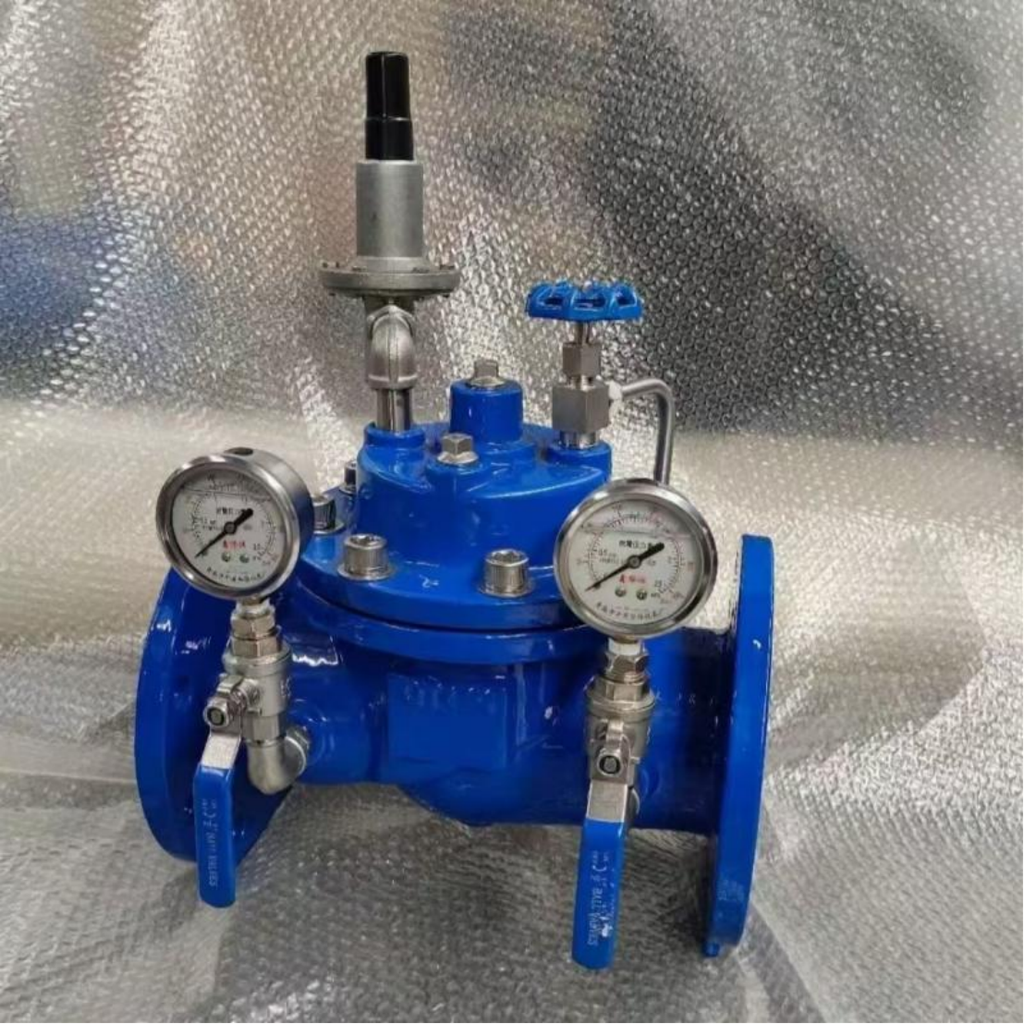
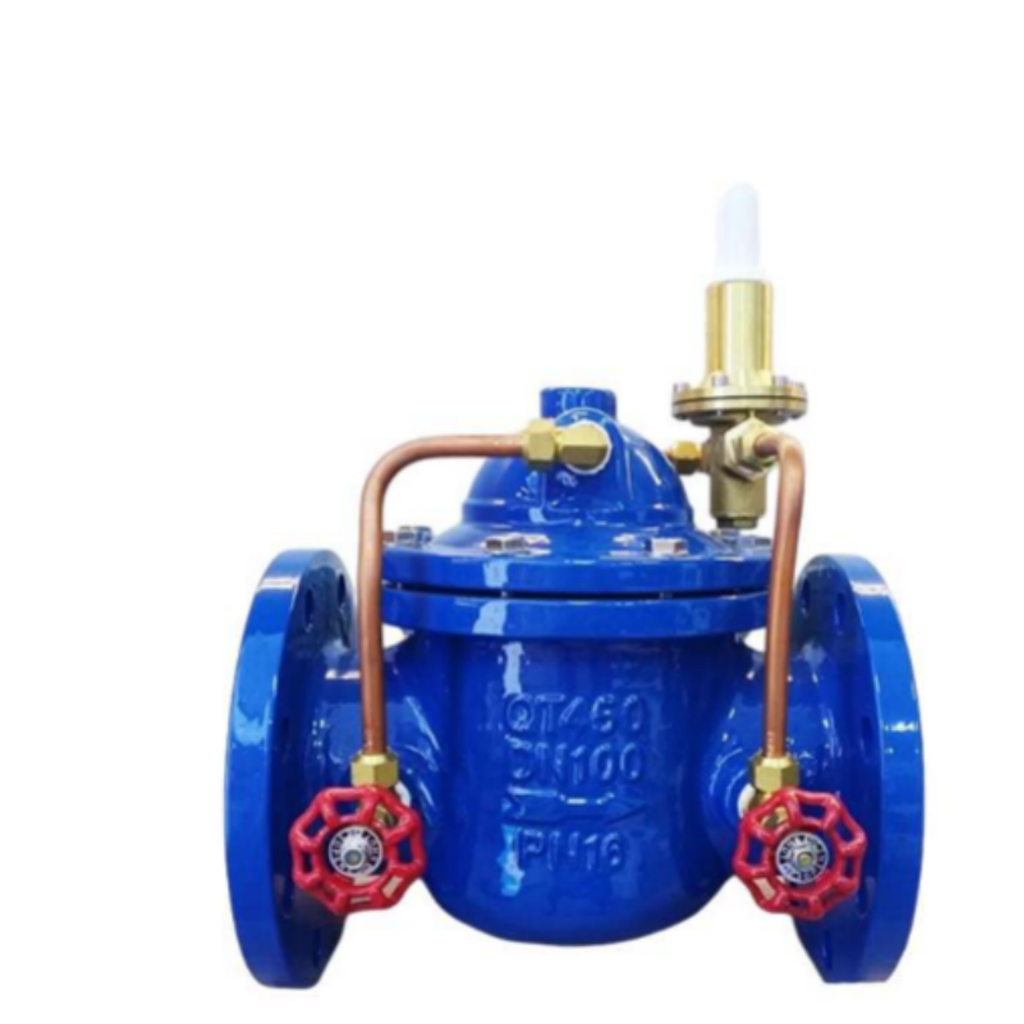
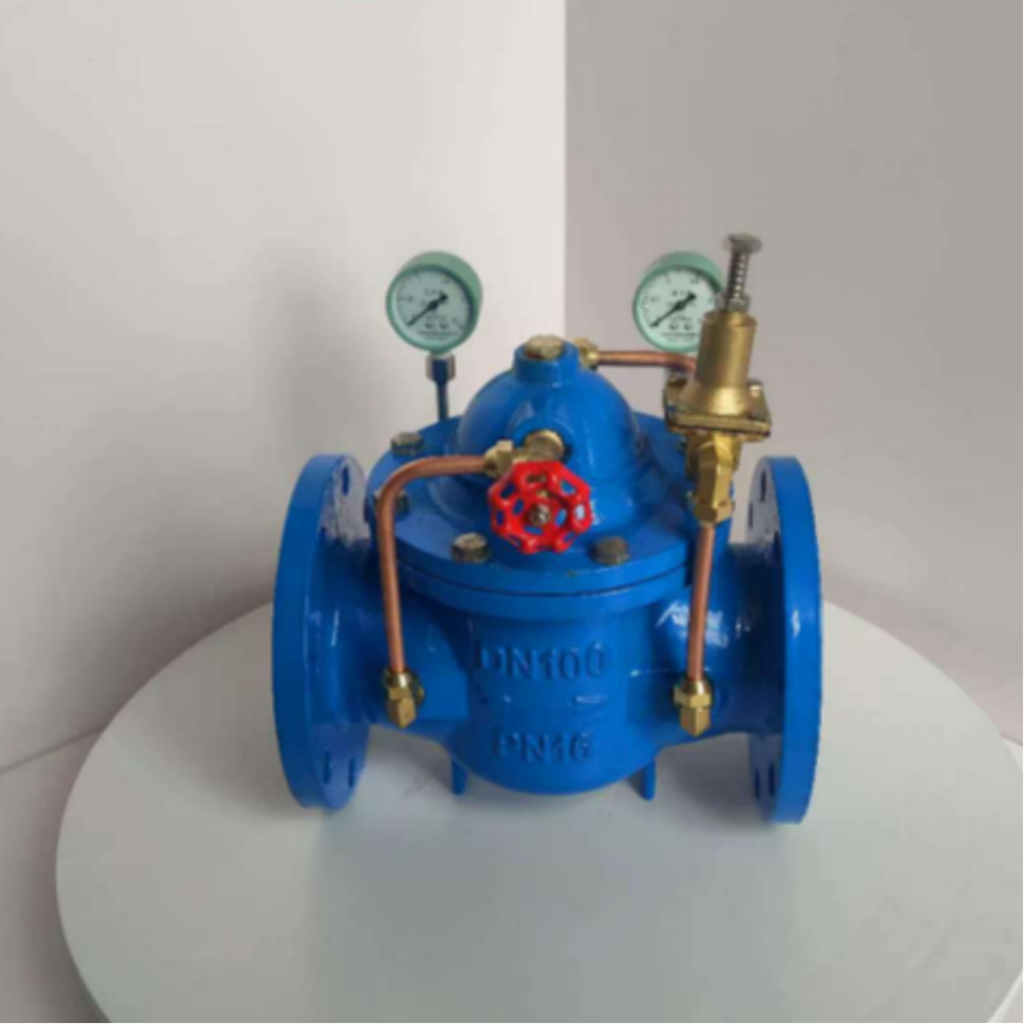
X piloted pressure reducing and stabilizing valve (hereinafter referred to as 200X pressure reducing valve) is a self-operated diaphragm hydraulic control valve, which is driven by the water pressure of the medium itself and does not require external power supply. It is an automatic pressure stabilizing valve commonly used in large water supply and drainage projects. The combined structure of main valve and pilot valve is adopted, with higher control accuracy, stronger pressure bearing capacity and larger water flow. It is applicable to large diameter main pipe, high-level water supply, municipal main pipe network, large fire fighting system, industrial circulating pipe network and other high pressure, large flow and high requirements project scenes, and it is also the mainstream model of the current project supporting.
Compared with other pressure regulating equipment, the pressure reducing valve has become the preferred equipment for pressure regulation of the pipe network by virtue of its core advantages such as self-operated operation, zero energy consumption, accurate pressure stabilization, wide adaptability and low operation and maintenance cost. It can effectively avoid the hidden dangers of high pressure in the pipe network, extend the service life of pipeline equipment, save water resources and operation and maintenance cost. It is an indispensable core supporting valve for various water supply and drainage, industrial and fire protection projects.