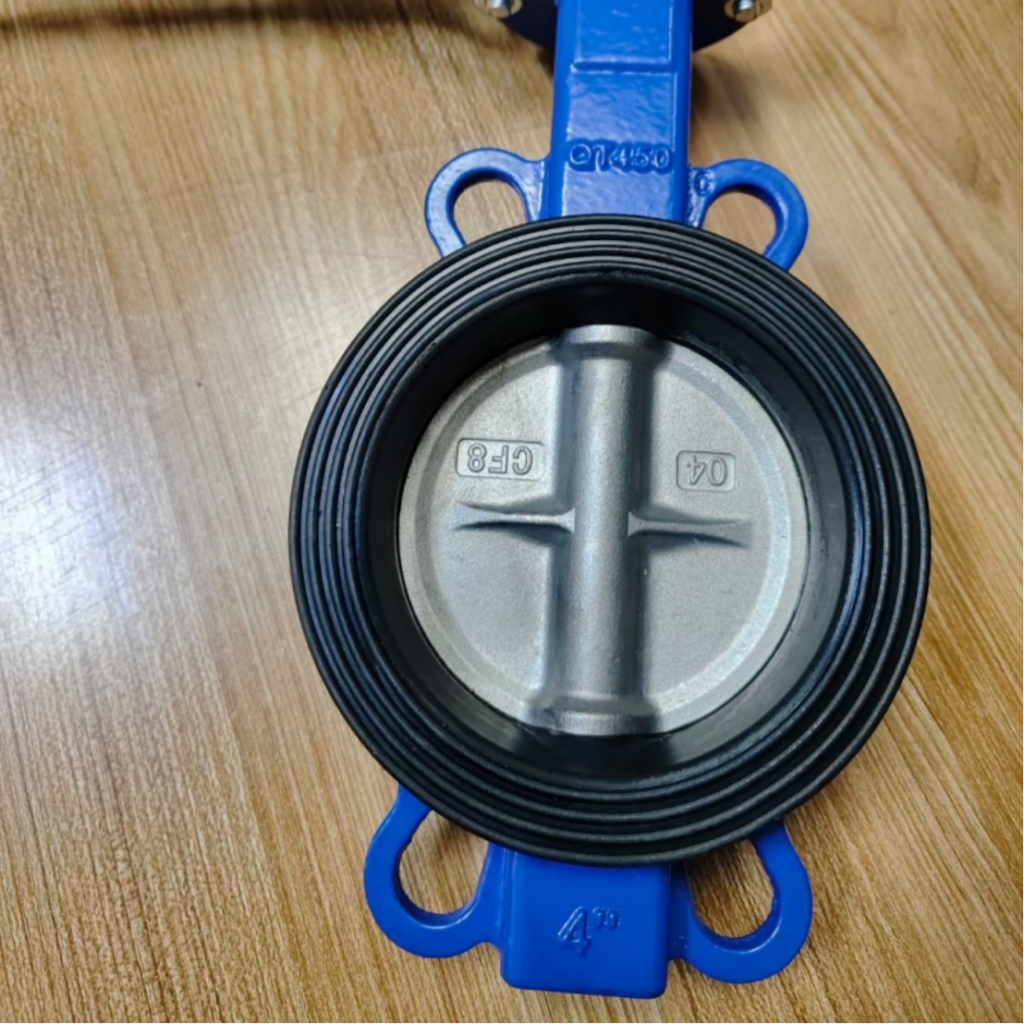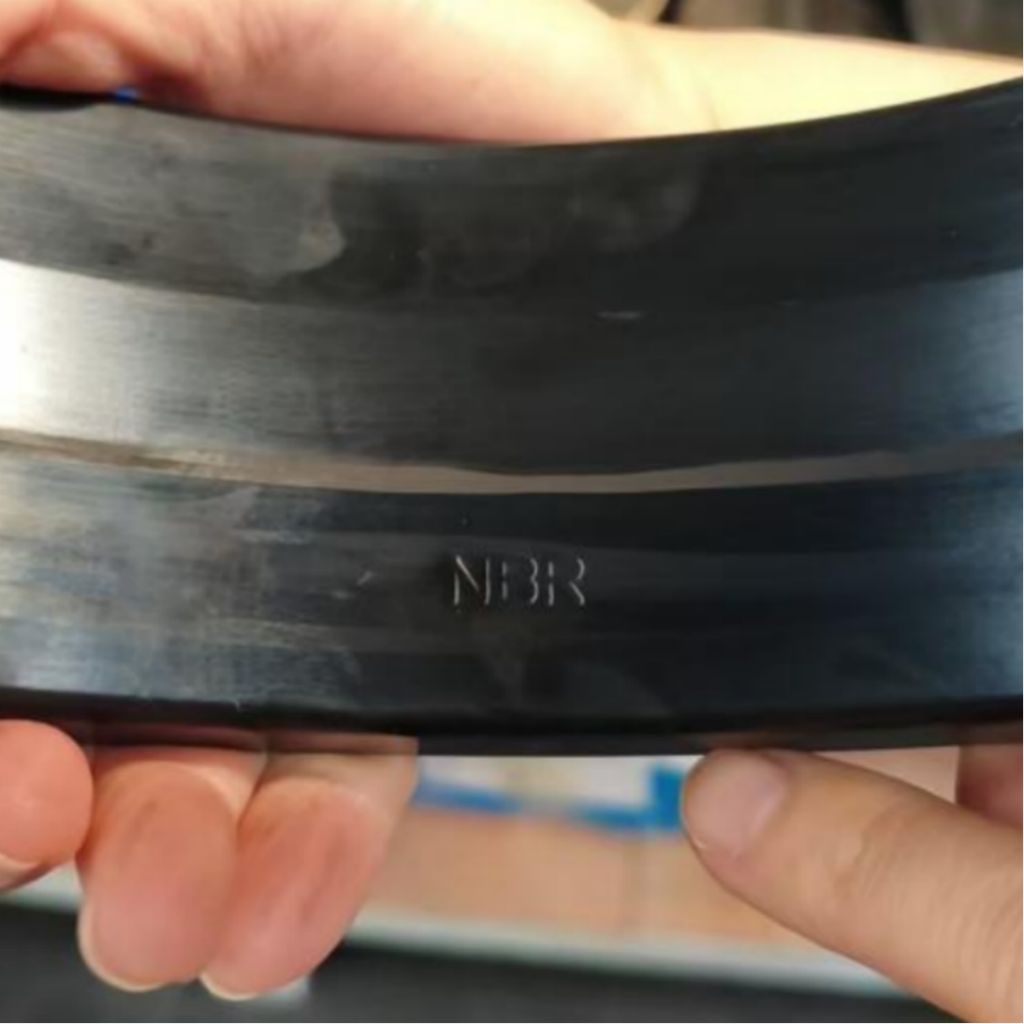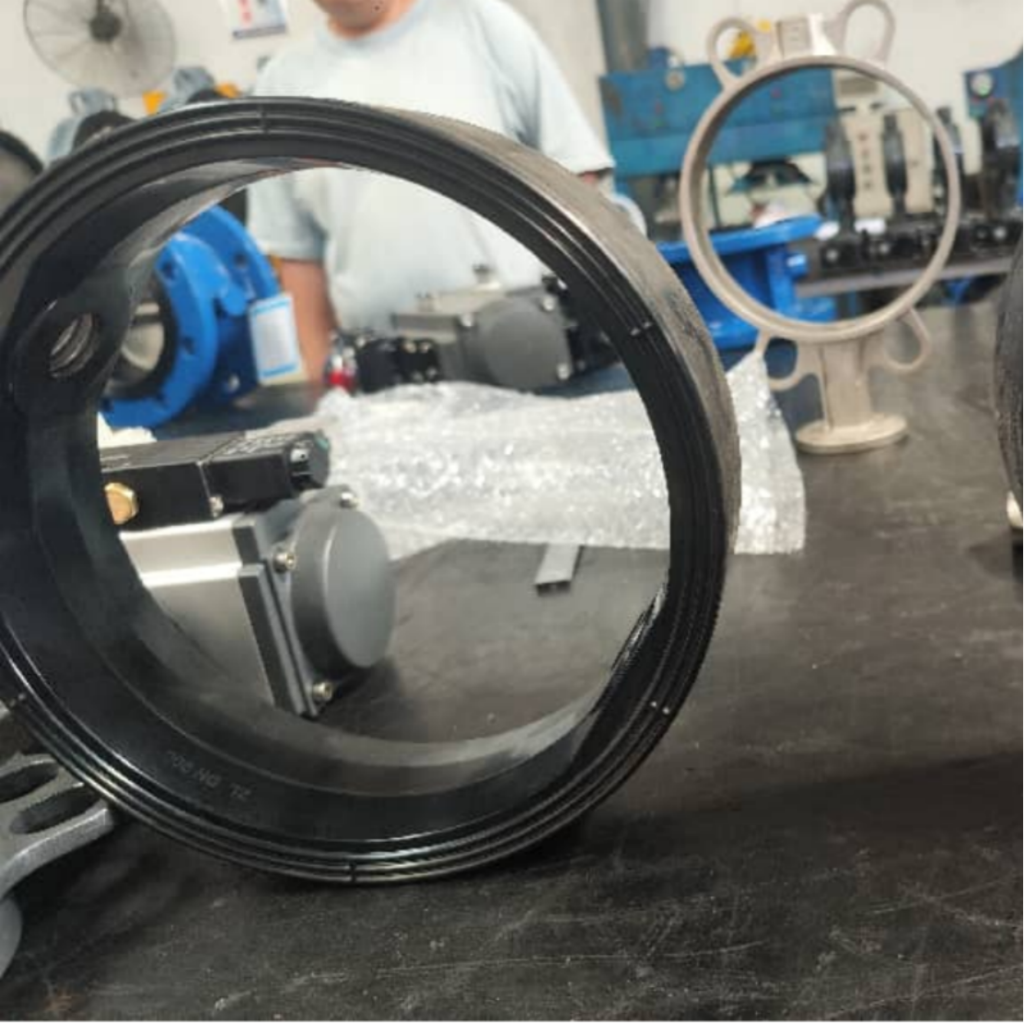
The sealing performance, service life, and adaptability to working conditions of soft sealed butterfly valves depend on the dual matching of valve seat sealing rubber material and valve body material. Among them, EPDM ternary ethylene propylene rubber and NBR nitrile rubber are currently the two most commonly used sealing materials for soft sealed butterfly valves in municipal water supply and drainage, fire HVAC, industrial pipelines, and offshore export engineering. The valve body can flexibly choose various materials such as cast iron and stainless steel according to working conditions to adapt to different corrosion and pressure environments. Most engineering procurement, pipeline designers, and on-site operation and maintenance personnel tend to overlook the compatibility differences between rubber materials and valve body materials, and habitually use universal selection, resulting in problems such as aging and cracking, medium swelling, seal leakage, premature failure, etc. of butterfly valves, increasing pipeline operation and maintenance costs and project rework risks. Having a clear understanding of the material characteristics, temperature resistance range, and medium compatibility differences between EPDM and NBR, and selecting the corresponding valve body material, is the core key to accurately selecting soft sealed butterfly valves and ensuring long-term stable operation of pipeline systems.
Soft sealed butterfly valves, with their advantages of light opening and closing, low flow resistance, good sealing performance, compact structure, and maintenance free, have become the mainstream regulating and shut-off valves for atmospheric and normal temperature pipeline systems, widely suitable for PN10, PN16 municipal and industrial conventional working conditions. EPDM and NBR rubber materials have similar performance in basic elasticity, sealing fit, and wear resistance, but there are significant differences in weather resistance, high temperature resistance, corrosion resistance, and medium compatibility. The two materials cannot be interchangeable in working conditions, and mismatches can directly cause butterfly valve sealing failure, pipeline leakage, and frequent equipment maintenance and replacement. Simply put, EPDM is a standard material for civil municipal engineering, with a focus on water purification, outdoor use, aging resistance, and resistance to humid and hot working conditions; NBR focuses on oil resistance, wear resistance, and high cost-effectiveness, suitable for ordinary industrial oil containing media working conditions.
EPDM EPDM is the standard sealing material for soft sealing butterfly valves in municipal water supply, fire protection pipelines, and HVAC circulating water projects. It has excellent water resistance, steam resistance, ozone resistance, UV resistance, and aging resistance. It has been used for a long time in outdoor exposure, outdoor pipe networks, and underground wet underground environments, and is not easy to harden, crack, or deform. Its stable temperature resistance range is -40 ℃ to 120 ℃, fully compatible with conventional clean water pipelines and short-term high-temperature water circulation conditions. At the same time, it can withstand residual chlorine and weak acid alkali corrosion in water quality, and is suitable for clean medium scenarios such as water plants, community water supply, building fire protection, central air conditioning circulating water, and municipal clean water transportation. EPDM material does not swell or fall off after long-term immersion in water, and has stable rebound performance, which can maintain a long-term zero leakage sealing effect for soft sealed butterfly valves. It is also the preferred sealing material for domestic and foreign municipal engineering projects. It should be noted that EPDM rubber is not resistant to various oil media and will quickly swell and soften upon contact with engine oil, diesel, and hydraulic oil, completely losing its sealing ability. It is strictly prohibited to use it in oil containing industrial pipelines.
NBR nitrile rubber is an economical industrial sealing material with core advantages of super strong oil resistance, good mechanical wear resistance, and high cost-effectiveness. It is specifically suitable for industrial medium pipelines with trace amounts of oil. NBR structure is dense and stable, with excellent corrosion resistance and wear resistance to mineral oil, lubricating oil, fuel oil, and hydraulic oil. It is suitable for industrial circulating water, equipment cooling pipelines, indoor pipeline conditions with slight oil pollution media, and ordinary air media. Its conventional temperature resistance range is -20 ℃ to 80 ℃, with weak high temperature resistance, UV resistance, and weather resistance. It is prone to aging and cracking under long-term outdoor exposure and ozone environment, and is not suitable for outdoor municipal pipe networks and long-term immersed water purification systems. With its price advantage and oil resistance, NBR soft sealed butterfly valves are widely used in indoor ordinary industrial pipelines and are an ideal choice for economical industrial matching.
In actual engineering selection, materials can be accurately distinguished based on the pipeline medium and usage environment. For municipal tap water, domestic clean water, fire water supply, HVAC circulating water purification, outdoor outdoor pipeline network, and buried water supply and drainage projects, regardless of whether it is a national standard, American standard, or Russian standard overseas project, EPDM sealed soft seal butterfly valves are uniformly selected, which are resistant to aging, moisture and heat, and have long-lasting sealing performance, fully meeting the long-term stable operation of civil water purification projects and foreign trade project acceptance standards. For indoor circulating water in factories, process fluids containing trace amounts of oil pollution, equipment cooling pipelines, and closed working conditions without exposure to sunlight, NBR sealed soft sealed butterfly valves can be selected to effectively control procurement costs while ensuring stable sealing, with outstanding cost-effectiveness.
Most butterfly valve sealing failures on the market are caused by incorrect material selection. The misuse of NBR material in clean water pipelines can lead to long-term immersion aging, rebound attenuation, and slight leakage; Misuse of EPDM material in oil containing industrial pipelines can lead to rapid swelling and failure, as well as inadequate valve closure; The outdoor pipeline network uses NBR material, which is highly susceptible to UV and ozone erosion, cracking, and water leakage. There is no universal style for the two types of rubber materials, and strict selection according to the working conditions is necessary to fully utilize the core advantages of zero leakage, low failure, and long service life of soft sealed butterfly valves. Legitimate soft sealed butterfly valves support customization of multi material valve bodies, and cast iron valve bodies can be selected for conventional working conditions, with high cost-effectiveness and stable structure; 304 and 316 stainless steel valve bodies can be selected for corrosion-resistant and acid alkali medium working conditions, with stronger corrosion resistance and suitable for harsh scenarios such as chemical and sewage. All valve bodies are equipped with integrated EPDM/NBR valve seats, with no splicing gaps and high sealing fit. After water pressure strength testing and zero leakage testing for air tightness, the full specification covers DN50-DN1200, supporting multiple driving modes including manual, electric, and pneumatic, and suitable for various domestic and foreign water supply and drainage, fire protection, and industrial pipeline engineering projects.
In summary, EPDM sealing soft sealing butterfly valve is mainly featured with water resistance, weather resistance and aging resistance, which is suitable for the whole scene of municipal, fire protection, civil water purification and outdoor pipe network; NBR sealed soft sealed butterfly valve is characterized by oil resistance, wear resistance, economy and practicality, and is suitable for indoor ordinary industrial oily medium working conditions. Accurately distinguishing the adaptation boundaries of two sealing materials can prevent premature damage to butterfly valves, pipeline leakage, frequent maintenance and other problems from the root, greatly reducing the maintenance costs in the later stage of the project. If you have selection needs for overseas pipeline projects, municipal renovation, industrial supporting facilities, we can provide parameters such as pipeline medium, working temperature, working environment, etc., and obtain accurate material selection solutions for free. At the same time, we support requesting product drawings, querying valve specifications, foreign trade bulk pricing, and overseas project customization to quickly obtain exclusive engineering quotations.
Valve World Global Valve Industry Technical Media
Flow Control Network Fluid Control Technology Platform
Ali International Station Store Products – Butterfly Valve