
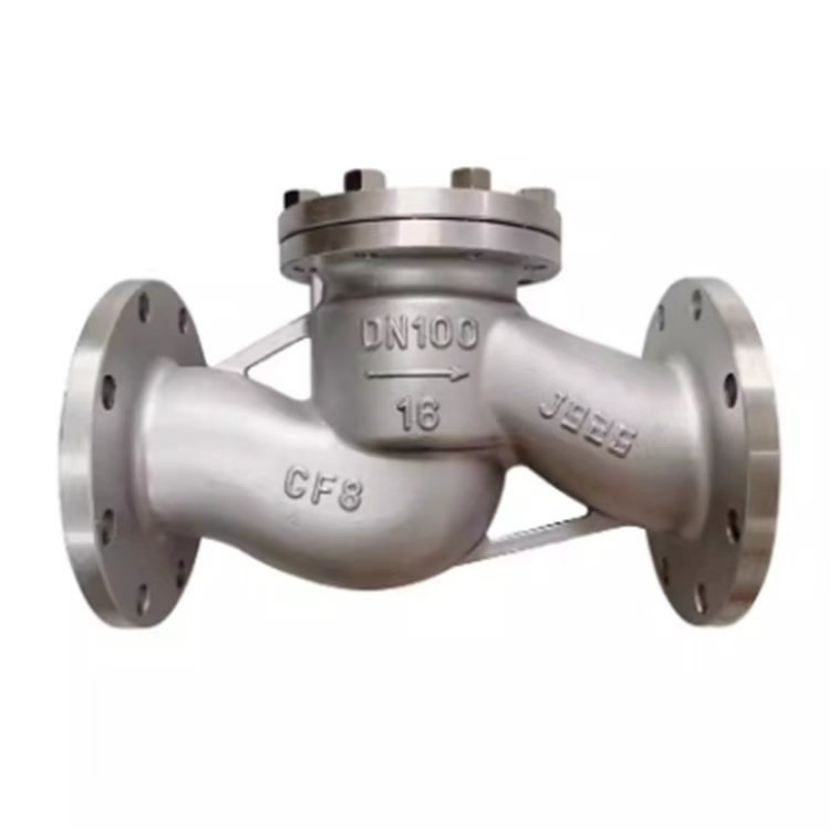
A lift check valve is a type of check valve in which the disc slides along the vertical centerline of the valve body. Lift check valves can only be installed on horizontal pipelines. In high-pressure, small-diameter lift check valves, the disc can be made of a spherical shape. The shape of the valve body of a lift check valve is the same as that of a globe valve (they can be used interchangeably), so its fluid resistance coefficient is relatively large. Its structure is similar to that of a globe valve, with the valve body and disc being the same as those of a globe valve. The upper part of the disc and the lower part of the bonnet are machined with guide sleeves. The disc guide sleeve can freely rise and fall within the bonnet guide sleeve. When the medium flows in the forward direction, the disc is opened by the thrust of the medium. When the medium stops flowing, the disc falls onto the seat by its own weight, preventing the medium from flowing backward. The straight-through lift check valve has the direction of the medium inlet and outlet channels perpendicular to the direction of the seat channel; the vertical lift check valve has the direction of the medium inlet and outlet channels the same as the direction of the seat channel, and its flow resistance is smaller than that of the straight-through type.
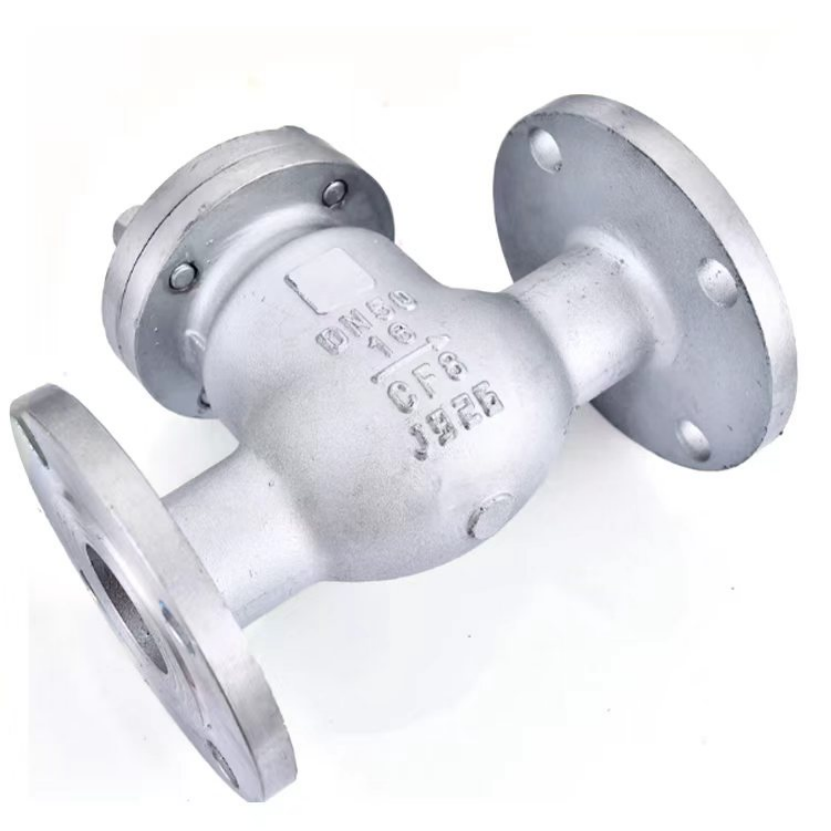
The disc of a swing check valve is disc-shaped and rotates around the pivot axis of the seat channel. Because the internal channel of the valve is streamlined, its flow resistance is smaller than that of the lift check valve. It is suitable for low flow rates and situations where the flow does not frequently change, but it is not suitable for pulsating flow. Its sealing performance is not as good as that of the lift check valve. Swing check valves are divided into single-disc, double-disc, and multi-disc types, mainly based on the valve diameter, to reduce the hydraulic shock when the medium stops flowing or flows backward.
The butterfly check valve has a structure similar to that of a butterfly valve, with the main difference being that a butterfly valve, as a shut-off valve, must be driven by an external force, while a butterfly check valve is an automatic valve and does not require a driving mechanism. When the medium stops flowing or flows backward, the butterfly plate rotates to the seat under the action of its own weight and the backward-flowing medium. This type of check valve can be used in both horizontal and vertical pipes and is usually installed in a wafer type. Under the action of the fluid pressure, the two discs overcome the spring force and rotate around the pin shaft. The open state is somewhat like the “>” symbol. Some straight pipe sections should be reserved at the inlet and outlet of the valve because the discs need a certain amount of rotation space.