
Due to the fact that globe valves and gate valves have some similarities in appearance and both have the function of cutting off in pipelines, many circle friends who have little contact with valves often confuse the two. In fact, if observed carefully, the differences between stop valves and gate valves are quite significant. Firstly, in terms of valve structure, gate valves can be tightly closed against the sealing surface by the medium pressure to achieve a non-leaking effect. When opening and closing, the valve core and the valve seat sealing surface are always in contact and rub against each other, thus the sealing surface is prone to wear. When a gate valve is nearly closed, the pressure difference before and after the pipeline will increase significantly, causing more severe erosion of the sealing surface. The structure of a gate valve is more complex than that of a stop valve. From the appearance, for the same diameter, a gate valve is taller than a stop valve, and the structural length of a stop valve is longer than that of a gate valve. Additionally, gate valves can be classified into rising stem and non-rising stem types. The sealing surface of a stop valve is a small trapezoidal side of the valve core (depending on the shape of the valve core); while a gate valve achieves sealing by the outer edge of the gate plate.
In terms of specific functions, a globe valve can be used for both shut-off and rough flow regulation. The stop valve has an S-shaped flow path, so the fluid resistance is relatively high and the opening and closing stroke is short, approximately 1/4 of the valve seat diameter. When a gate valve is fully open, the fluid resistance in the valve body channel is almost zero. The stroke of a gate valve is slightly longer than the diameter of the valve and the pipe, so the opening and closing time is longer.
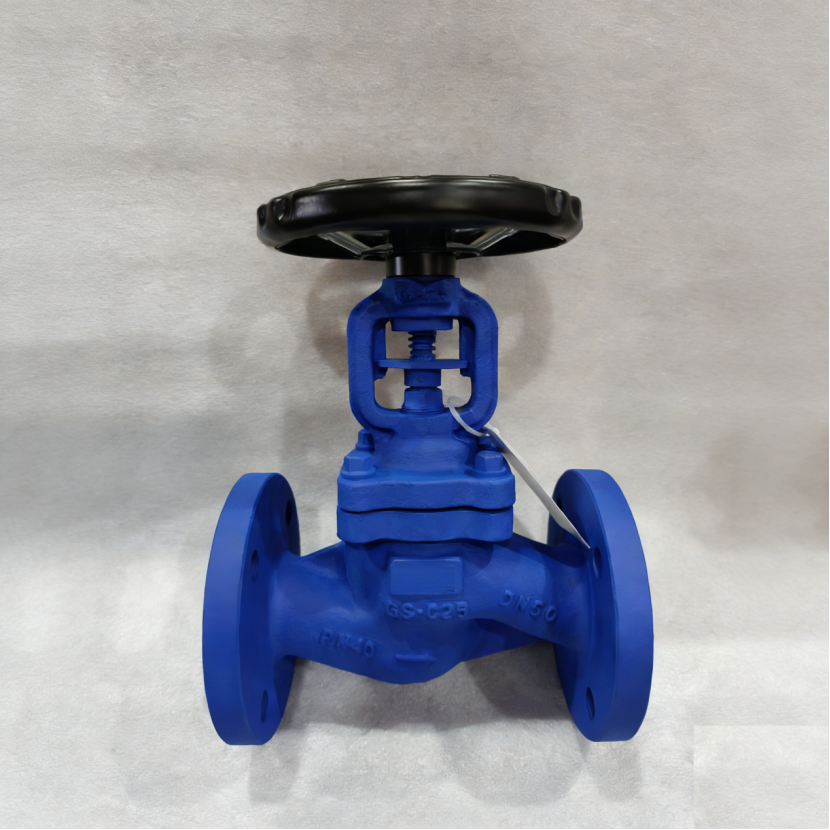
The installation of the final stop valve and gate valve is different. The gate valve can work equally well in both directions of flow, and there is no requirement for the direction of inlet and outlet during installation. The medium can flow in both directions. However, the stop valve must be installed strictly in accordance with the direction indicated by the arrow on the valve body. There is also a clear regulation regarding the inlet and outlet direction of the stop valve.