
What are PBE and TBE and POE and NPT
In the vast field of industry and construction, the way pipes and valves are connected like the grammar of language, they are not only the cornerstone of the smooth operation of the system, but also a subtle fusion of technology and aesthetics. Today, let’s delve into PBE (Plain Both Ends), TBE (Thread Both Ends), POE (Plain One End) and NPT (National Pipe Thread). And how they complement key components such as gate valves and ball valves to weave a magnificent picture of functionality and beauty in the real world.
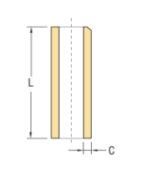
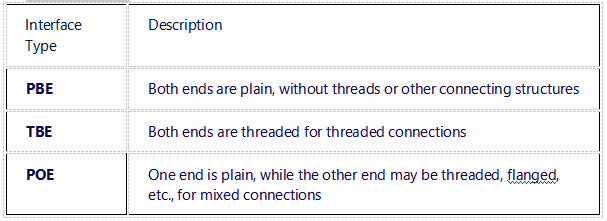
PBE (Plain Both Ends): PBE refers to having plain, smooth ends on both sides of a pipe or component, without threads or other special machining.
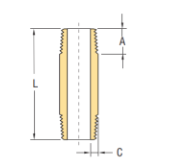
TBE (Thread Both Ends): TBE indicates that both ends of a pipe or component are threaded, allowing for threaded connections with other components.
Differences
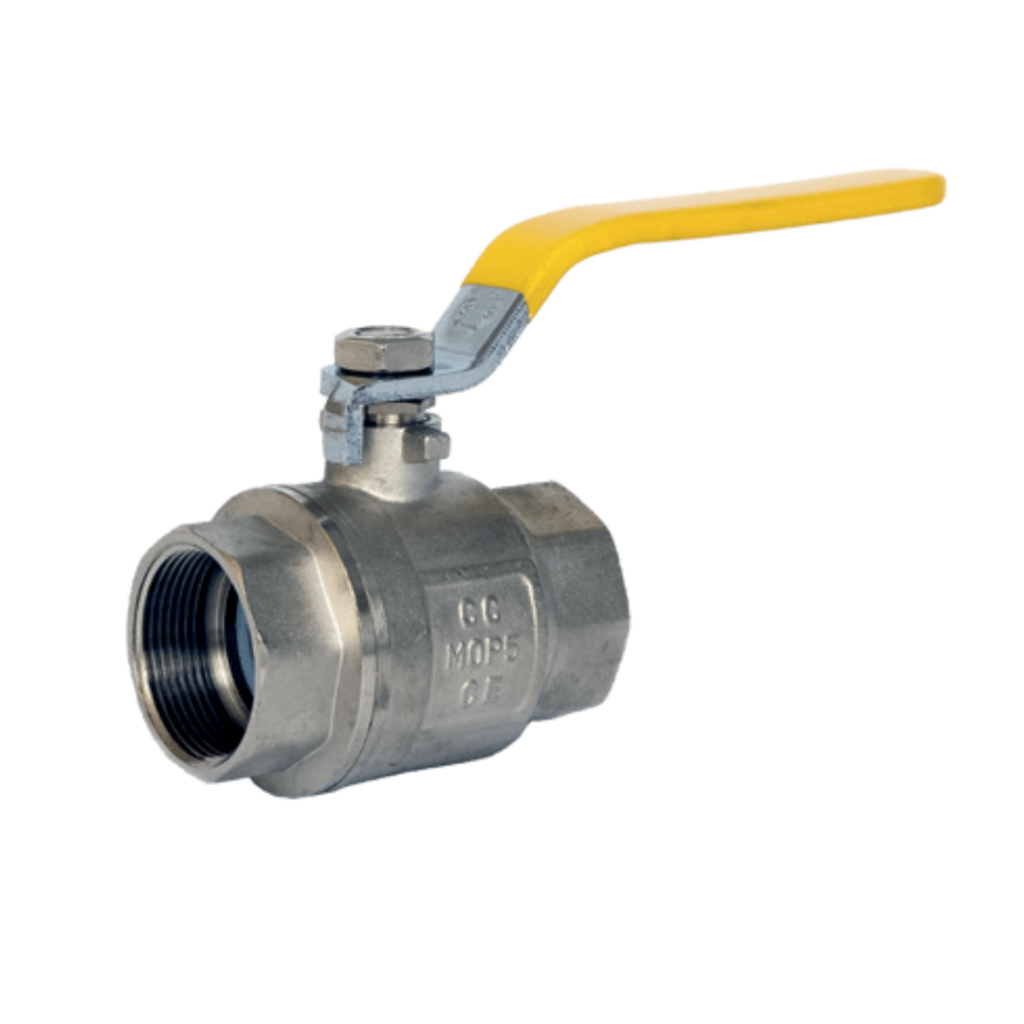
Application of Gate Valves
Gate valves are commonly used to open and close pipelines, control flow direction, and regulate or control the flow of media. The connection type (e.g., flange, thread, welding) of a gate valve depends on specific installation requirements and environmental conditions.
PBE (Plain Both Ends): Although PBE is a plain end connection, it may not be a direct connection method for gate valves. However, in some special cases, if the gate valve’s sides need to connect with other plain-ended pipes or components, and welding or other non-threaded connection methods are used, PBE-interfaced pipes or components may be used as intermediate links.
TBE (Thred Both Ends): TBE-interfaced pipes or components can be directly connected to gate valves with corresponding threads. This connection method is more common in small piping systems. However, for large or high-pressure piping systems, threaded connections may not be preferred due to the need for higher sealability and strength.
POE (Plain One End): POE-interfaced pipes or components may be less common in gate valve applications because they are typically used for mixed connection scenarios. But if one side of the gate valve needs to connect with a plain-ended pipe, while the other side needs to connect with a threaded, flanged, or other interface pipe, POE-interfaced pipes or components could be used as transition elements.
Real-Life Application Scenarios
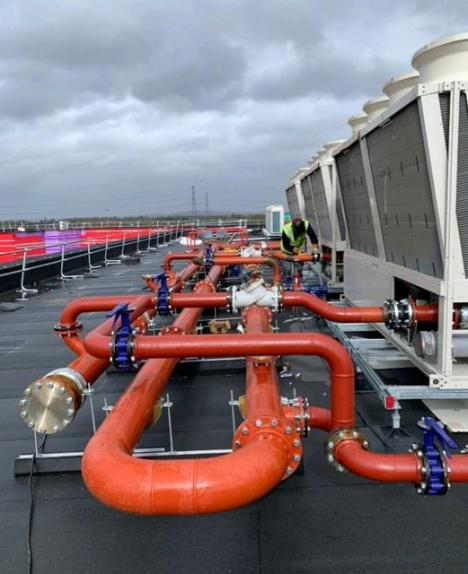
PBE: Used in scenarios requiring smooth connections or welding, such as some chemical piping systems, low-temperature or high-pressure piping systems.
TBE: Commonly found in small piping systems, household water piping systems, and some low- or medium-pressure piping systems.
POE: Used in scenarios requiring mixed connections, where one end needs a smooth connection (e.g., welding) and the other end needs a threaded, flanged, or other interface connection in a piping system.
In the real world, the four pipeline interface modes of PBE, TBE, POE and NPT together with gate valves, ball valves and other components constitute a complex and precise pipeline system. They are widely used in urban water supply, drainage systems, petrochemical plants, natural gas transmission networks and various industrial production equipment.
In these cases, they not only bear the important responsibility of controlling the fluid flow and ensuring the safety of the system, but also add a bright color to the entire industrial environment with their unique aesthetic value. Take the urban water supply system as an example, the pipes of the PBE interface are closely connected by welding, forming a solid and stable water transmission network.
In pumping stations and valve Wells that require frequent maintenance or regulation, TBE and NPT interfaces are closely integrated with gate and ball valves to ensure smooth water flow and stable system operation. At the same time, the design of these pipes and valves also takes into account the coordination with the surrounding environment, so that the entire water supply system meets both functional needs and aesthetic effects.
In short, the perfect combination of PBE, TBE, POE and NPT with gate valves, ball valves and other components not only reflects human’s unremitting pursuit of technological progress, but also shows the harmonious symbiosis of function and beauty in industrial aesthetics. In the future development, we have reason to believe that these technologies and designs will continue to innovate and integrate to bring more convenience and beauty to our lives.